Common knee injuries and what Pilates can do to help.
Knee Sprains
This can be that the ligaments have become stretched and painful, or that they are torn and the knee is unsteady. ACL is the most common knee sprain and usually happens when the foot is fixed (eg in football boots or in skis) and the body twists. If the ACL ligament is unable to hang on as the knee twists, it can become stretched and weakened. If it tears a little, or completely, this will require reconstructive surgery. If the person does have surgery, they will be given a rehab plan involving physio sessions, and will not be able to return to exercise immediately. Once cleared to exercise, Pilates moves that will most benefit this client are:
Heel slides: Usually given in weeks 1-2 of rehab.
 This is a modified version of Pilates Single Leg Stretch. You would begin lying on your back, with both legs straight. Begin to slide the injured sides’ heel in towards the buttocks until you feel slight discomfort inside the joint, then hold that position for 10 seconds, and return to a straightened leg. You may prefer to keep the uninjured leg bent with the foot flat on the floor to support you and help you keep a neutral spine position.
Single Leg Kick: Usually given in weeks 2-4 of rehab.
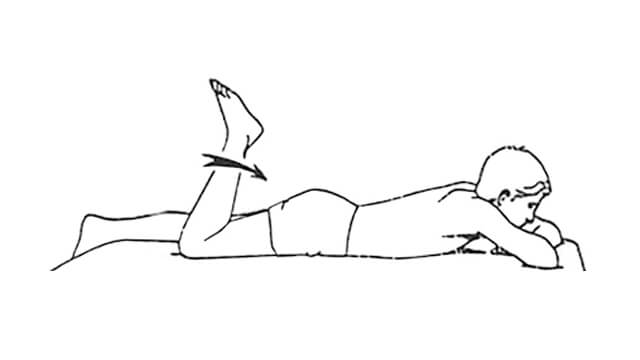 Take your time to find neutral spine on your front as it is an awkward position to hold. Once you are there, lift the heel of the affected leg towards the buttocks within the range of comfort. Try to hold it at the top for a few seconds, and lower slowly. If you need your unaffected leg to support, you may hook it underneath and support some of the weight during the movement.
Mobility Squats: Usually given in weeks 2-6 of rehab.
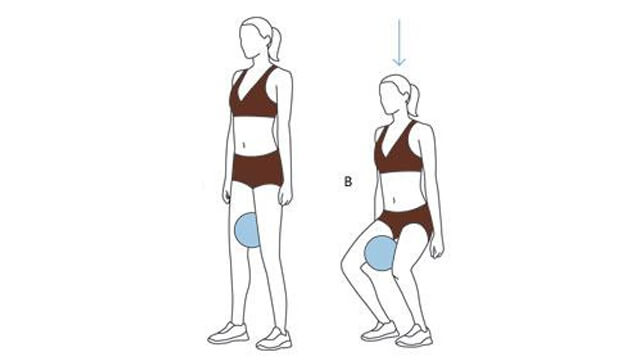 Again take your time to find your neutral spine and make sure you have equal weight on each leg. Place a small squashy ball between the knees to aid stability and add additional inner thigh strengthening. Hold at the lower point for 5-10 seconds and return to standing.
Hamstring Stretches & Calf Stretches: Usually given after 4 weeks of rehab.
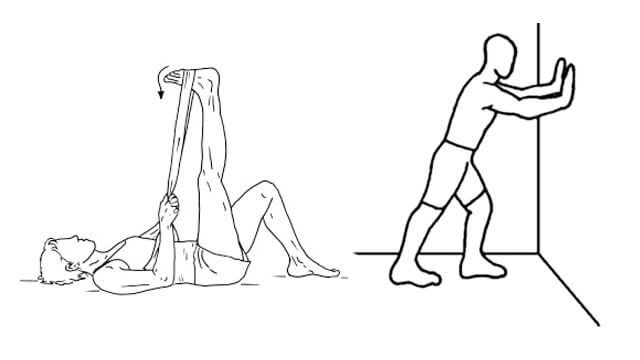 Short gentle stretches rather than aiming for an increase in flexibility at this stage. You are aiming to keep the muscles around the knee from becoming tight.
Knee Bursitis
In your joints, you have fluid filled sacs called bursas. These act as shock absorbers to lower the stress caused by our movements. They can become infected, irritated or inflamed and swell up. This can cause no trouble, or can be painful. You may have been seen by a physio and treatment can include draining the bursa. Once cleared to exercise, Pilates moves that will most benefit this client are:
Heel slides, mobility squats with a small ball and hamstring and calf stretches, as already seen in ACL recovery.
In addition to these the client could also perform:
Side Kick With Static Quad Contraction
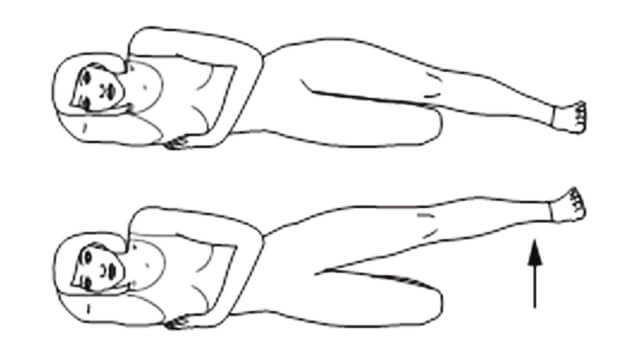 Side lying on your uninjured leg. You may bend your bottom leg to help with balance, however as you progress, you can straighten this as you would in a regular Pilates side kick. Lift your top leg as we would in our usual layers for side kick, but squeeze your thigh throughout. Take your time and remember to keep your core engaged and control the movement.
Meniscus Tears
As you can see from the diagram at the top, the meniscus are shock absorbing pieces of cartilage. These can be problematic due to aging, overuse or an injury. You should see a medical professional for a diagnosis, and will usually receive a treatment plan with this. In the early stages of rehab, range of movement exercises such as the heel slides, mobility squats with a ball, and single leg kick (from ACL recovery programme above) would be beneficial. If you are pain free, and have been advised by your physio to begin strengthening exercises, then you can include muscle contractions (such as the side kick with static quad squeeze as seen above for bursitis). In addition to these, you could also perform:
Shoulder Bridge
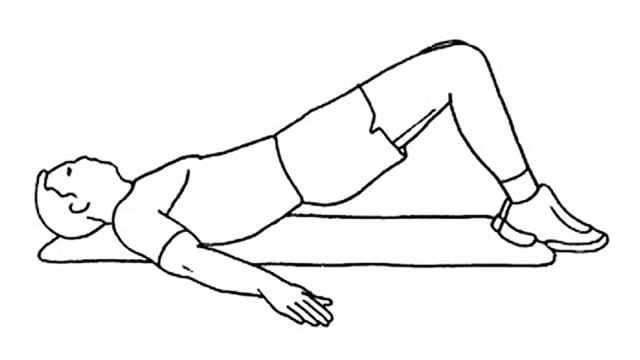 This would be performed to strengthen the buttocks and hamstrings around the knee joint. Pay particular attention to knee alignment and stability throughout.
There are many other knee conditions such as knee joint dislocation, knee fractures and patellofemoral pain (runners knee) and chrondromalacia patella (degeneration of the cartilage under the kneecap). These vary in treatment plans and should be advised by a medical professional or physio prior to attending Pilates.