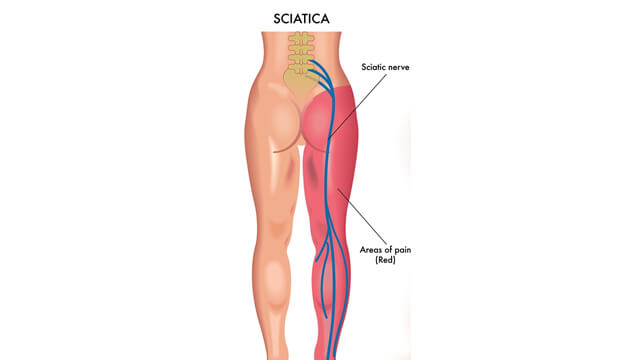
Your sciatic nerve is the longest nerve in your body. It runs from the base of your spine, through your buttocks and all the way down both legs ending in your feet. Sciatica is pain through the nerve with the most painful areas usually being the buttock and thigh, although it can also be painful in the lower back and below the knee. Sciatica can be ongoing and painful.
 What causes it?
Your spine is made up of a series of vertebrae with disks in between. Most cases of sciatica are caused by a damaged (slipped) disk. This can change the shape of the disk meaning it begins to squash or irritate the sciatic nerve. This causes pain ranging from mild irritation to overbearing discomfort. Sciatica can also be caused by a spinal injury, a growth within the spine, or narrowing of nerve passages in the spine, although these are less common.
Pain relief
If you suffer with sciatica, it is important to work within your limitations each day. You will have some days where you feel better than others. Most sciatica will pass within 6-8 weeks without medical treatment, although you may be using painkillers and heat/ice packs which will ease the symptoms. Movement helps as it allows the disks to remain mobile, so gentle exercise and stretching is fantastic for sciatica sufferers.
Prevention
We can’t guarantee you could completely prevent yourself suffering with sciatica, but you can definitely decrease your chances with a few simple tips:
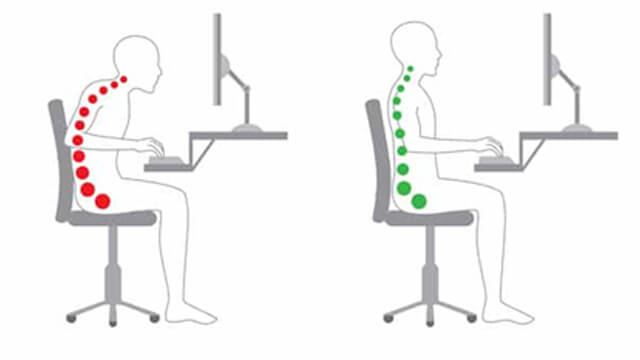
• Posture. This is your number 1 defence in the fight against back pain. If you can improve your overall posture (and awareness of posture) then you will undoubtedly place your disks in a better position for longer periods of the day decreasing your chances of disks pressing on the sciatic nerve.
• Applying ‘good posture’ to all your activities. Good posture is not just for your Pilates session, it’s for all standing, sitting, walking and lifting. This will reinforce good habits and help to prevent you from potential sciatic nerve pain. If you spend some of your day sitting, remind yourself how to sit correctly.
• Strengthening your abdominals, back and core. Pilates is key to this and a strong back and core will go a long way towards sciatica prevention.
• Exercise with a good mobility section and warm up, and an effective cool down and stretch will keep you supple and your spine safe.
 In the words of Joseph Pilates “You are only as young as your spine is flexible.”
Advice
If you are suffering with sciatica, you may have been given stretches to do daily by a physiotherapist. These take into account where the sciatic nerve is and how to stretch it and keep mobile. They will also take into account your specific symptoms and adapt to suit you. If you are unsure, please consult a medical professional for further advice.
Stretches should be done gently once a day, and will include:
Lying Knee To Chest
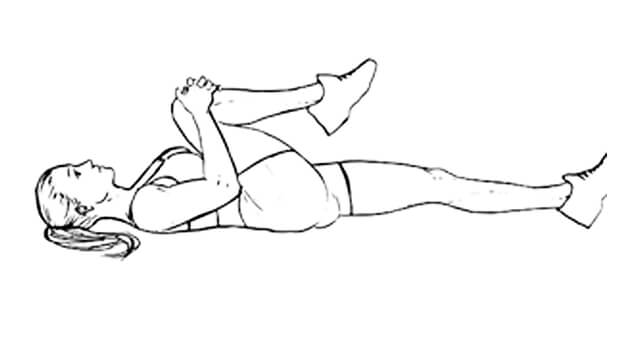 Laying on your back, ease one leg towards you and hold below the knee (on your shin). You should be able to relax into this position creating a stretch through your buttocks.
Glute Stretch
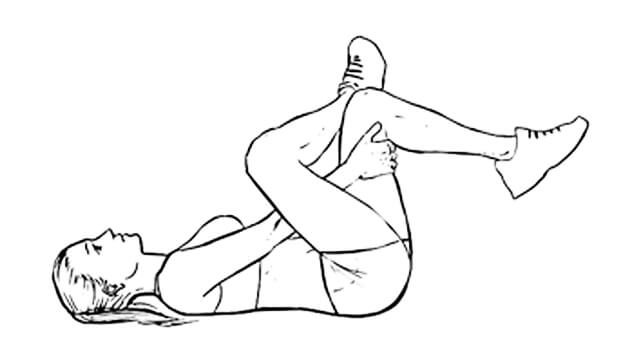 Laying on your back with your knees bent, place your right ankle on to your left knee. Pick up your left leg, and reach behind your left thigh. Repeat on the other side.
Hamstring & Calf Stretch Combined
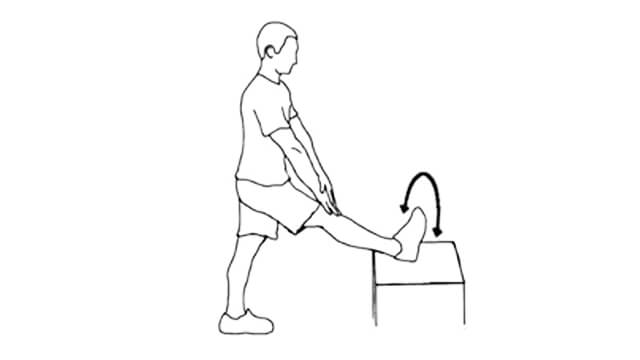 Standing, place your right heel on a step or chair. Make sure you don’t twist to your left. Gently ease your toes towards your nose. Hold for a few seconds, release by pointing your toes away and bending your knee, then repeat. Make sure you do both legs the same.