Your shoulder is held together by these 4 rotator cuff muscles (supraspinatus, infraspinatus, teres minor and subscapularis). They stabilise the shoulder joint and allow proper use of the arm. They also help with rotation and lifting the arm overhead
 Many sports use overhead arm movement, ie racket sports and swimming. This places the rotator cuff tendons in contact with the bone, which can lead to inflammation and pain (often referred to as shoulder impingement).
The other consideration with this group of muscles is they get tired easily. This means the shoulder can become unstable which in turn can lead towards impingement.
So how can we use Pilates to help prevent shoulder injuries?
Pilates can improve posture and reduce muscle imbalances, as well as strengthening your stabilising muscles. This means if we focus more on posture realignment and include a few shoulder stability and rotation moves, we can go a long way towards strengthening the rotator cuff muscles which will help to protect the shoulder and prevent injury.
Posture correction
If you feel as if your head pokes forwards in your normal posture, then unfortunately this places you at higher risk of rotator cuff injury and pain. You are encouraged in Pilates to correct your neck alignment throughout classes, and it would be particularly valuable to you to continue doing this throughout your week.
Roll Down
 This would normally feature in your mobility section. Try to focus on restacking the vertebrae on the way up, and realigning neck and shoulders.
Spine Twist
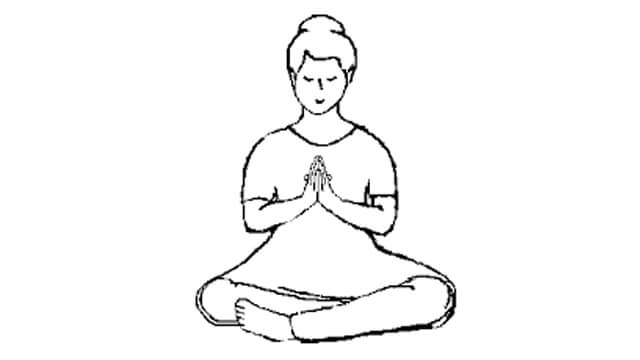 Sitting on a block to allow greater spine movement, with focus on lengthening the spine and realigning the shoulders. Gently rotate from left to right remembering to breathe. After a few, check your shoulders as they have a tendency to raise up during this move. Keep them back and down.
Cat Stretch
 This can be used as a release or preparation, with the focus on shoulder stability and finding neutral alignment after the stretch.
Double Leg Stretch
 Make sure you are laying in a neutral spine with your tva and pelvic floor engaged. Initially perform just the arm circles preparation, with the focus on making the circles smooth and not wobbly. Increase the circle size over a few weeks.
Supine Arm Floats
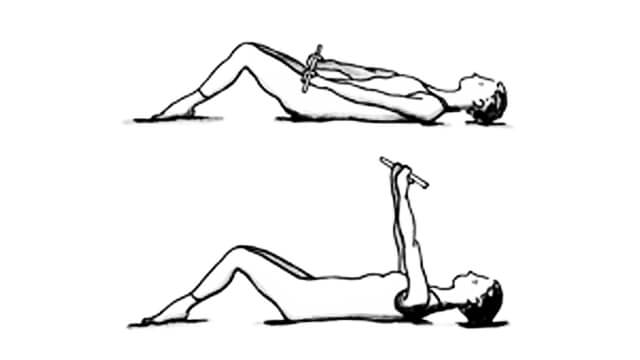 Laying on your back, with perfect posture and alignment, hold a bar or stick and support your ‘bad’ shoulder by guiding it through the movement with your ‘good’ shoulder. Raise as far as is comfortable and gradually increase the movement over a period of a few weeks. When your shoulder is pain free you can use opposing arm movements to progress.
Swan Dive Preparation
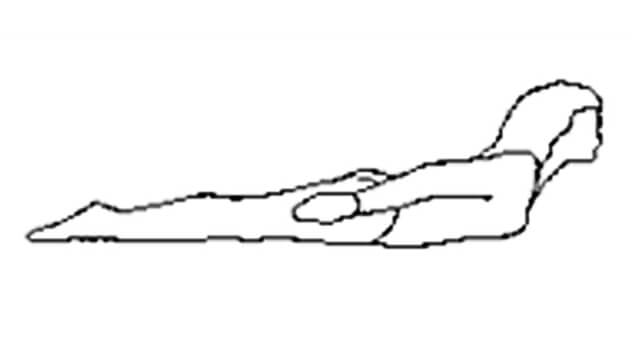 Lie on your front. Make sure you are in neutral spine. This is a bit tricky as it feels like you are pushing your pubic bone into the floor. Once you have that, switch on your TVA and pelvic floor, and slide your shoulder blades back and down. Focus on shoulder positioning to strengthen the upper back and help the shoulder blades stay in the best position for good posture and stability. To progress, lift your head and shoulders slightly, but keep the movement small.
Dumb Waiter
 If you are not familiar with this exercise, imagine a waiter holding plates of food in each hand (elbows at 90 degrees, palms up, seated position). The waiter then passes the food to people on either side (rotate at the shoulder so forearms stay parallel to the floor. This can be performed with a band to help strengthen the rotator cuff muscles.
Arm Floats
 This can be performed in standing or sitting, start with good posture and check you have engaged yout tva and pelvic floor. Then, gradually float your arms upwards making the movement smooth rather than jerky. If you prefer you can hold the bar / stick and guide use your stronger side to assist your weaker side. As you progress, you may wish to add rotation.
A combination of strengthening rotator cuff muscles appropriately, increasing your awareness of your shoulder stability, and performing other moves (such as weightlifting, swimming, tennis etc) with good technique will go a long way towards keeping rotator cuff injuries away.